AC installation in Mesa, Arizona
Mesa AC replacement. Installed correctly.
Right-sized replacement options for Mesa homes and businesses, designed around the property, comfort goals, airflow, efficiency, and long-term reliability. Nearby Valley scheduling is also available.
Straightforward local service
Practical solutions for Arizona comfort.
A quality installation is more than changing equipment. Liquid HVAC reviews system type, capacity, ductwork, controls, drainage, electrical requirements, and startup performance before the project is considered complete.
- Free replacement estimates
- Trane and RunTru equipment options
- Air conditioner, furnace, coil, and air-handler replacements
- Thermostats, comfort controls, and airflow improvements
- Professional startup, testing, and homeowner orientation
When to call
Signs your system needs attention.
Uneven temperatures throughout the property
Equipment near the end of expected life
High energy use despite maintenance
Obsolete refrigerant or unavailable parts
Comfort needs have changed
The Liquid HVAC approach
Clear communication from start to finish.
Review the property
We discuss comfort concerns and review the existing equipment, airflow, duct conditions, access, drainage, controls, and site requirements that affect the project.
Select the approach
Capacity, system type, compatible equipment, staging, controls, and efficiency are considered around the property and the customer’s goals.
Define the scope
The written proposal identifies the selected equipment, included work, major exclusions, price, and project-specific conditions before authorization.
Complete the installation
The approved equipment and connections are installed with attention to placement, airflow, drainage, electrical and control work, access, and serviceability as applicable.
Start up and hand off
The system is operated and the checks appropriate to that equipment are completed before controls, filters, settings, and available project documents are reviewed.
A scope you can review
What the written proposal should make clear.
A replacement proposal should identify the exact equipment and the work required for that property. Depending on the project, it may address the compatible equipment combination, controls, duct or transition work, drainage, electrical or gas work, roof or crane access, permits, exclusions, price, payment terms, applicable financing information, manufacturer requirements, and expected schedule.
The signed written proposal and applicable manufacturer documents—not a general webpage—control the final equipment, scope, price, schedule, financing, and warranty terms.
Compare the application
System types serve different properties and goals.
Air conditioner and gas heat
An outdoor air conditioner can be paired with compatible indoor coil and furnace equipment where the property uses gas heat.
Heat pump and air handler
A matched heat-pump system uses refrigeration for both cooling and heating and works with compatible indoor equipment and controls.
Packaged equipment
Rooftop or ground-level packaged applications combine primary heating, cooling, coil, and blower components in one outdoor cabinet.
Ductless mini split
Ductless equipment may fit a room or zone where extending a central duct system is not the practical approach.
Repair or replace?
Use the complete system picture, not one shortcut.
A replacement decision should account for the existing system’s condition, repair history, failed component, parts and refrigerant availability, current warranty coverage, comfort and airflow, the cost of the proposed repair, and the complete scope of replacement. The property’s future use and any changed comfort needs also matter.
Age provides context, but it does not decide the answer by itself. A clear diagnosis and a written replacement scope make the two paths easier to compare.
Startup and commissioning
Installation is not complete until the system is operated and checked.
Commissioning details depend on the equipment and site conditions. Applicable checks may cover thermostat and control operation, airflow and temperature performance, refrigeration-circuit operation, electrical operation, drainage and overflow safeguards, heating and cooling modes, staging, filter access, and customer orientation.
The exact commissioning procedure and project documentation should match the installed system and the approved scope.
Real Liquid HVAC work
Field experience you can see.
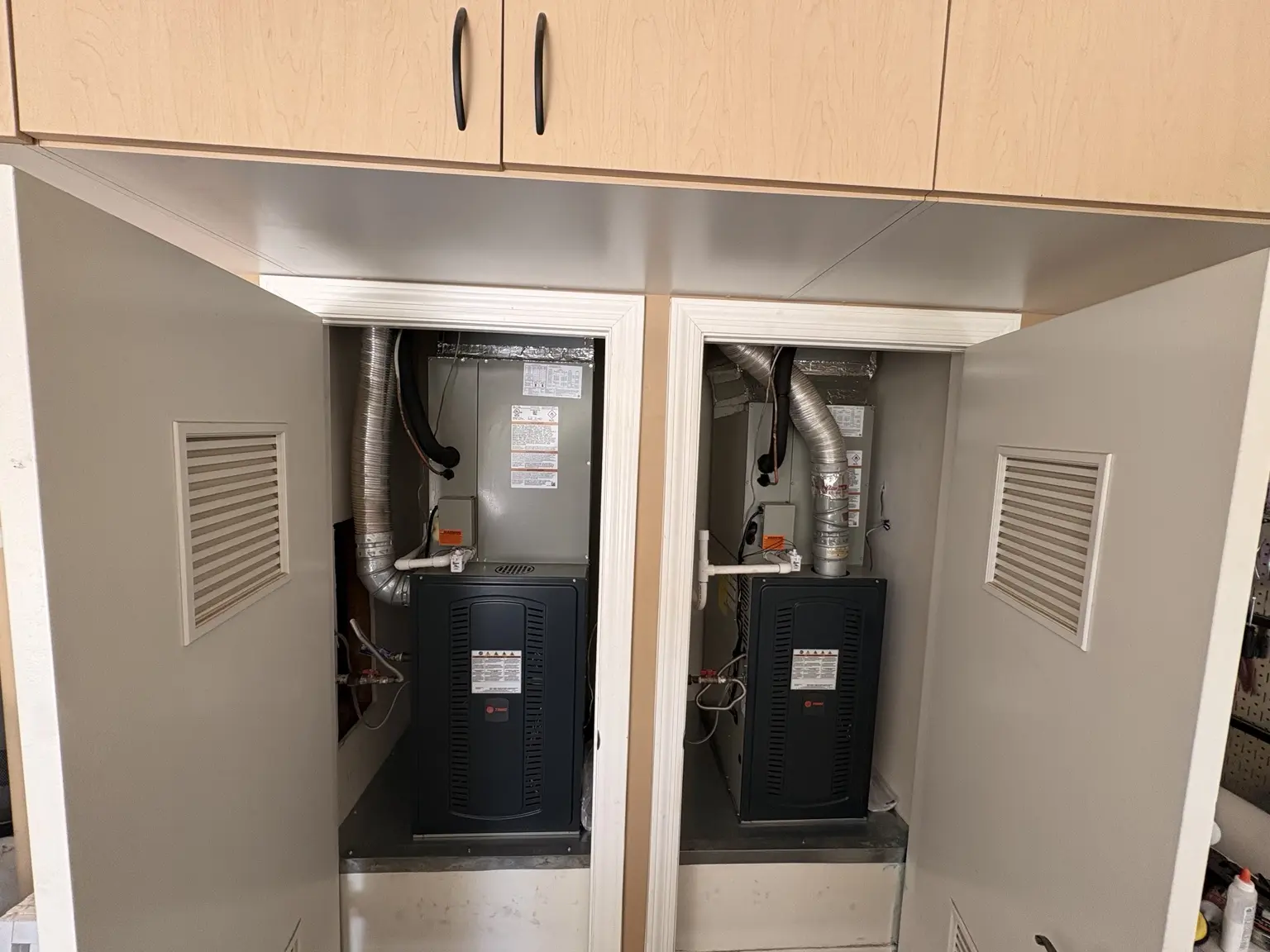
Two-system Trane installation
Real Liquid HVAC field photos show two coordinated furnace-and-coil systems and the outdoor condensers serving the home.
View the complete installation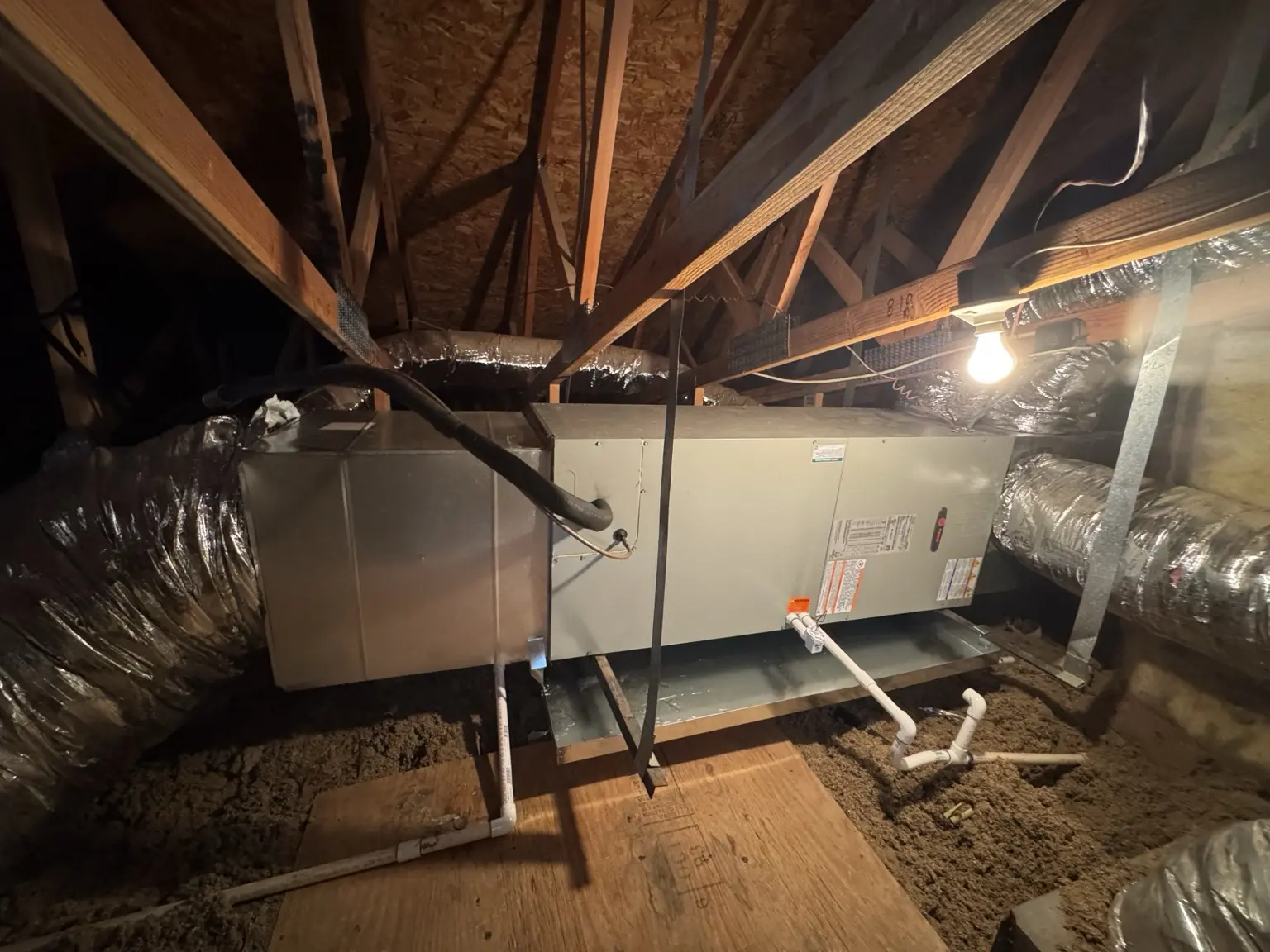
Attic air-handler installation
This horizontal attic project documents duct connections, refrigerant piping, condensate drainage, overflow protection, electrical connections, access, and serviceability.
View the attic project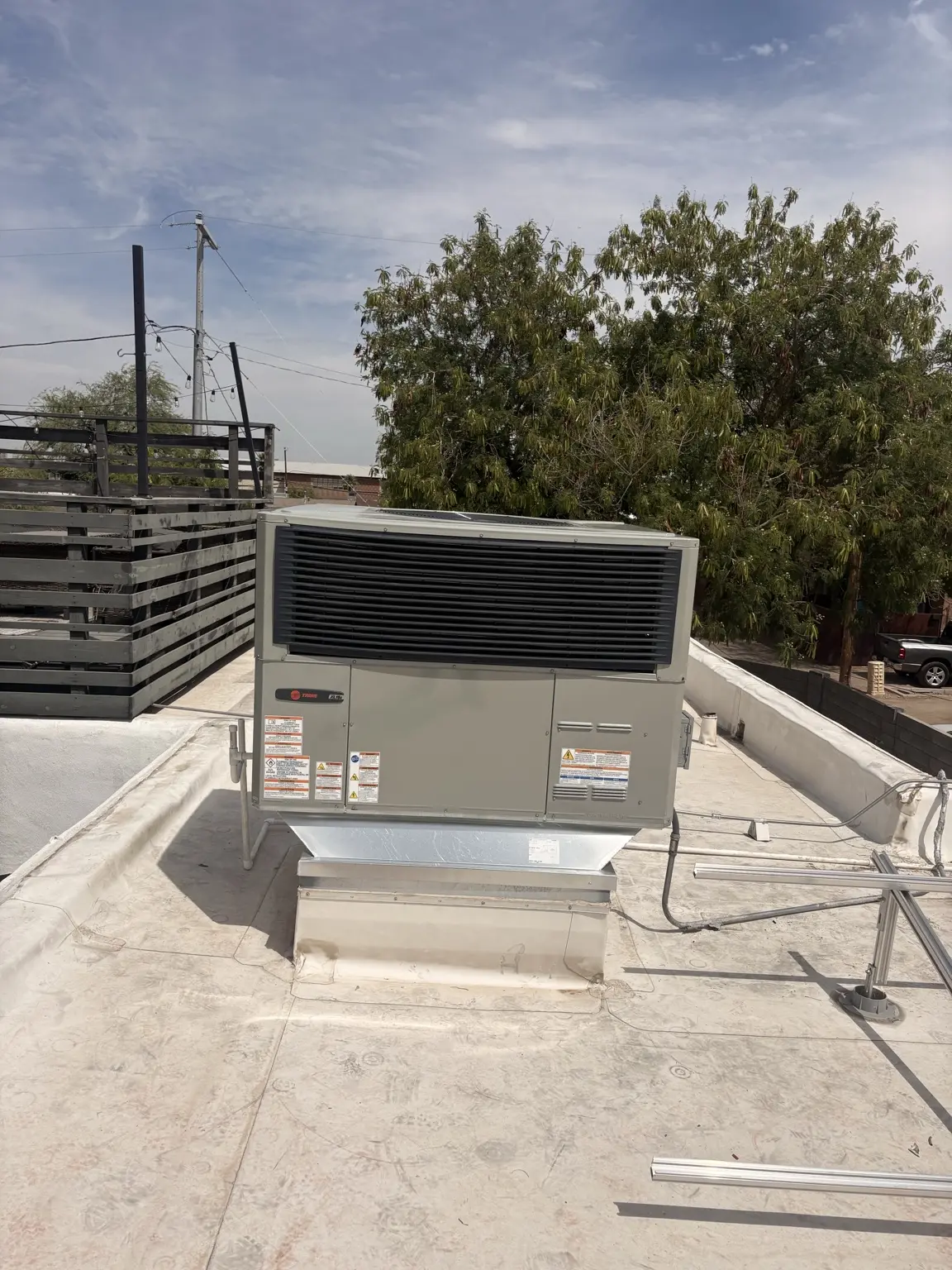
Rooftop package-unit installation
This completed residential rooftop project shows equipment support, a fabricated sheet-metal transition, electrical connection, service access, and weather-sealed roof details.
View the rooftop projectCommon questions
Helpful answers before you schedule.
How do you determine the right HVAC system size?
Capacity depends on the property, construction, heat gain, ductwork, airflow, equipment type, and comfort requirements. The appropriate evaluation and selection method depends on the project; a square-foot shortcut alone does not establish the final system choice.
Do the indoor and outdoor HVAC units need to be matched?
The indoor equipment, outdoor equipment, controls, and applicable accessories must be compatible. Published efficiency and performance depend on the exact certified combination, so the written proposal should identify the selected equipment rather than relying on a general product-family rating.
What does HVAC system commissioning include?
Startup and commissioning can include controls, airflow, temperature performance, refrigeration operation, electrical operation, drainage, heating and cooling modes, staging, filter access, and customer orientation. The checks performed depend on the equipment and site conditions.
Are permits, crane work, duct changes, and electrical work included?
Those needs are project-specific. The written proposal should identify the work included in the approved scope, anything excluded, and any separate access, permit, crane, duct, electrical, gas, or roof requirements that apply to the property.
Should I repair or replace my current AC system?
Consider the system’s condition, repair history, failed component, parts and refrigerant availability, warranty status, comfort and airflow, current repair cost, expected replacement scope, and plans for the property. Age is useful context, but it should not be the only factor.
How long does an HVAC replacement take?
Timing depends on equipment availability, access, the approved scope, site conditions, and whether the project needs roof or crane access, permits, duct changes, or electrical work. The project-specific schedule belongs in the written proposal or scheduling communication.
What warranty comes with a new HVAC system?
Manufacturer coverage can depend on the exact equipment, eligibility, registration, and written terms. Any labor or workmanship coverage should also be confirmed in the signed proposal and applicable warranty documents; those documents control rather than a general webpage.

Ready when you are
Planning an AC replacement?
Request service online, or call or text Liquid HVAC at (480) 490-4000 for current scheduling throughout the Phoenix Valley.