
01 · Commercial field work
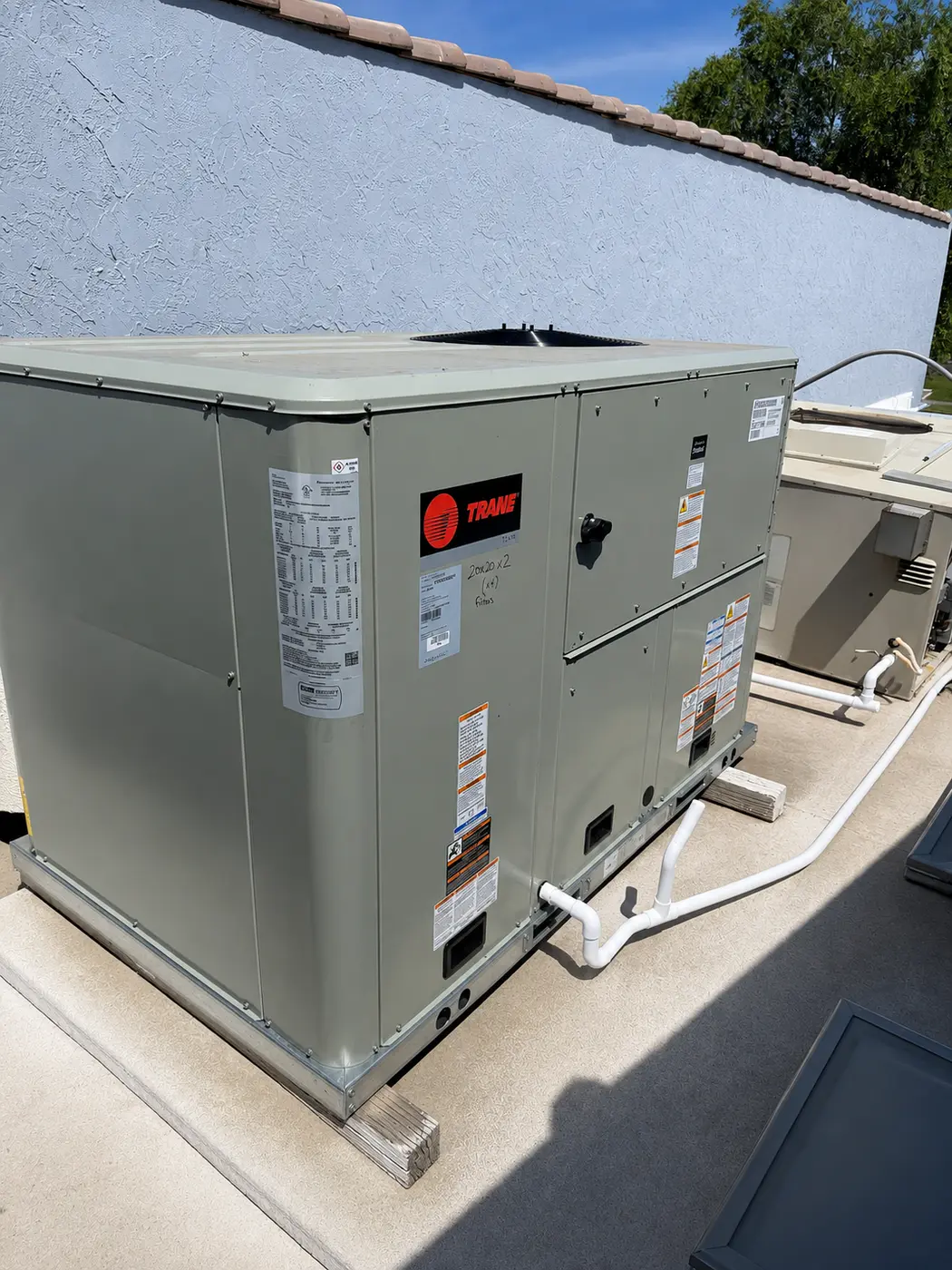
A Trane rooftop package unit up close
The photo shows a commercial Trane package unit positioned with its service panels accessible. The PVC piping at the base carries condensate away from the equipment, while the surrounding rooftop area provides access to the unit and nearby systems.
The exact model, capacity, and heating configuration must be confirmed from the equipment nameplate. What can be seen here is a complete rooftop cabinet designed to serve a commercial space from outside the occupied area.
02 · How it works
Heating, cooling, and airflow in one cabinet
A commercial package unit combines the primary HVAC components into one outdoor cabinet instead of splitting them between indoor and outdoor equipment. Depending on the model, the system may use a heat-pump or gas/electric configuration.
Conditioned air travels between the rooftop unit and the building through ductwork. Because the equipment serves an occupied commercial space, correct airflow, controls, staging, and drainage all contribute to dependable comfort.
03 · Details that matter
Reliable operation depends on the complete system
Commercial rooftop service involves more than checking whether the unit turns on. The appropriate evaluation depends on the equipment and the reported problem, but important areas may include:
- Condensate drainage and signs of water around the unit
- Filters, coils, blower operation, and available airflow
- Electrical components, controls, safeties, and staging
- Motors, belts when equipped, noise, and vibration
- Refrigerant-circuit operation when testing is appropriate
- Roof access, cabinet condition, and service clearance
Liquid HVAC evaluates the equipment as a complete system, explains measured findings, and recommends work based on the unit’s actual condition.
04 · Preventive care
Rooftop equipment works in demanding conditions
Commercial package units may operate for long hours while exposed to Arizona heat, sun, dust, wind, and monsoon conditions. Regular professional maintenance creates an opportunity to identify developing electrical, airflow, drainage, or mechanical concerns before they interrupt business comfort.
The appropriate maintenance scope depends on the equipment, operating schedule, site access, filter needs, and condition of the system. A qualified technician can document what was checked and explain any legitimate concerns before additional work is performed.
05 · When to call
Comfort complaints can be the first warning
Schedule commercial HVAC service when employees, tenants, or customers report uneven temperatures, weak airflow, unusual noise, repeated cycling, water near the unit, or a system that no longer keeps up with the building’s normal demand.
Liquid HVAC provides commercial rooftop package-unit diagnostics, repair, maintenance, and replacement planning across Mesa and communities throughout the Valley.